Architecting Sustainable Transformation

The Eastgate Framework marries rigorous psychological theory with pragmatic business strategy, enabling enterprise-scale change that is both profoundly human and rigorously measured.

The Philosophy of Transition

Change is situational; transition is psychological. While organizations can restructure, implement new software, or acquire competitors overnight, the human mind requires time and structured support to adapt. This distinction is the cornerstone of the Eastgate approach.

Traditional change management often fails because it treats people as variables in a project plan. Our methodology, rooted in adult learning theories and behavioral science, acknowledges that resistance is not defiance—it is a natural cognitive response to uncertainty.

By mapping interventions to the specific emotional and cognitive stages of the workforce, we systematically lower anxiety, increase psychological safety, and accelerate the time-to-competency for critical initiatives.

Colleagues discussing organizational culture in a calm environment

The Six Dimensions of Change

01

Sensing & Alignment

Before initiating change, we conduct deep diagnostic listening. We assess the organization's change fatigue, historical context, and cultural readiness, aligning the executive team on a unified narrative and clearly defined behavioral outcomes.

02

Cognitive Awareness

Individuals must understand the imperative for change before they can embrace it. We craft transparent, compelling communication strategies that answer the "Why now?" and "Why us?", establishing a logical foundation for the journey ahead.

03

Emotional Processing

Transition creates a sense of loss. We design structured interventions—such as town halls and intimate leader-led dialogues—that allow employees to voice concerns, process their reactions, and transition from resistance to tentative exploration.

04

Capability Building

Motivation without ability yields frustration. We partner with HR and functional leaders to map new skill requirements and deploy targeted learning experiences, ensuring every individual has the tools required to succeed in the future state.

05

Behavioral Adoption

This phase shifts focus from knowing to doing. We implement feedback loops, peer advocacy networks, and localized coaching to reinforce new behaviors in the flow of daily work, capturing early wins to build organizational momentum.

06

Systemic Integration

For change to endure, it must be codified. We hardwire new behaviors into the organization's DNA by realigning performance management systems, reward structures, and operational KPIs, rendering the new state the default state.

Methodology in Action

The Eastgate Framework operates across multiple organizational altitudes simultaneously, ensuring that strategy, leadership, and operational execution move in lockstep.

Dimension Executive Board Middle Management Individual Contributors
Strategic Alignment Defining the vision, setting investment priorities, and demonstrating visible commitment. Translating macro-strategy into departmental objectives and identifying operational roadblocks. Understanding how daily tasks connect to the broader organizational purpose.
Communication Delivering the overarching narrative and the business imperative (The "Why"). Contextualizing the message for specific teams and facilitating bi-directional feedback (The "How"). Voicing concerns, asking clarifying questions, and engaging in dialogue (The "What").
Capacity & Skill Modeling new behaviors and empowering resource allocation. Coaching teams through the learning curve and managing performance dips during transition. Acquiring new competencies, experimenting with new processes, and adapting to new tools.

Application Showcase

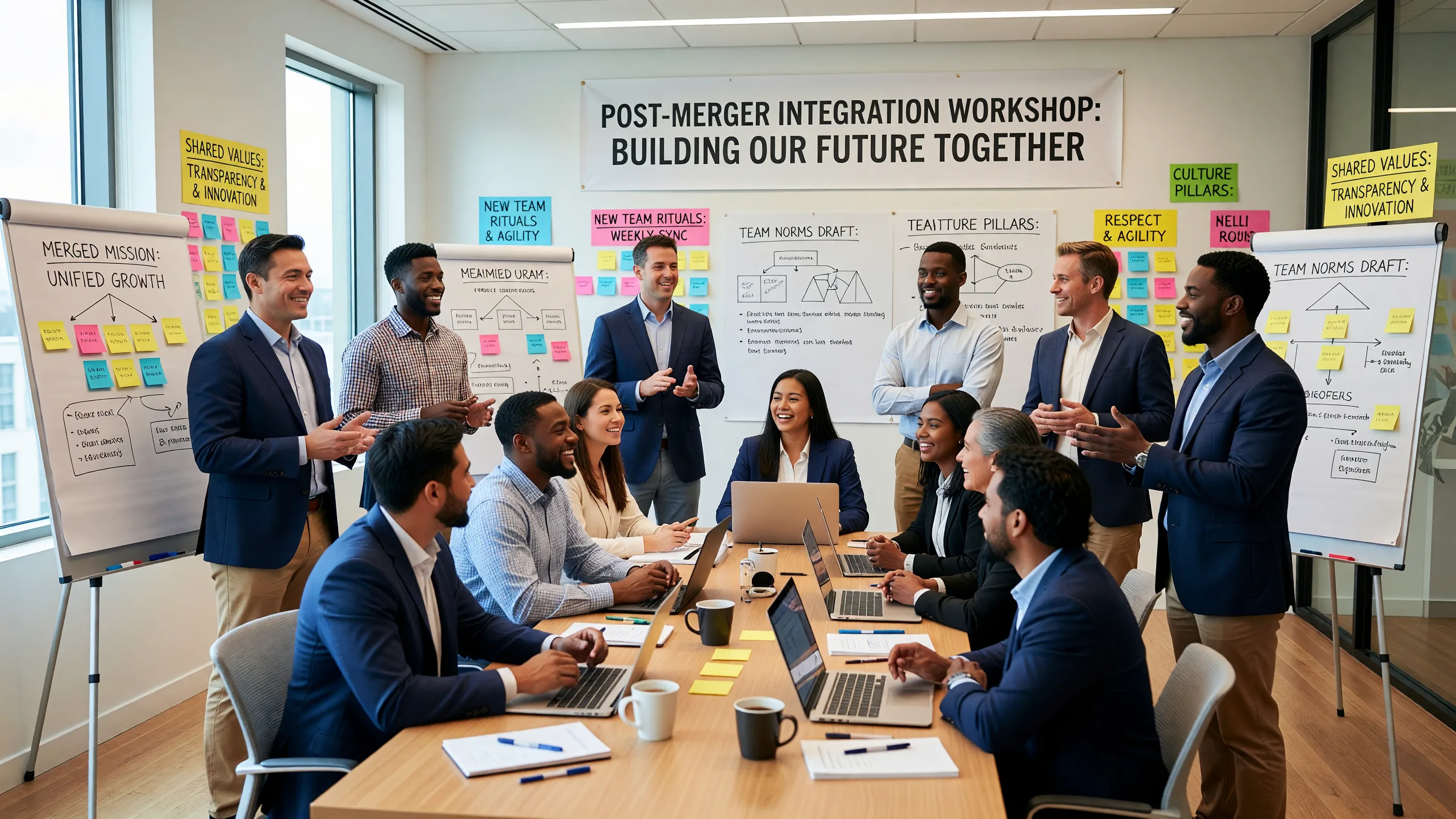
Post-Merger Cultural Integration

Post merger integration meeting

Following a high-profile merger between two rival financial institutions, the combined entity faced severe cultural friction, leading to a 22% spike in voluntary turnover among top-tier talent within the first quarter.

Eastgate was engaged to deploy our Sensing & Alignment phase. Through deep-listening tours and anonymous sentiment analysis, we identified that the core issue was not the new operational structure, but a perceived loss of autonomy among heritage employees from the acquired firm.

"Eastgate didn't just give us a communications plan; they gave us a psychological blueprint for uniting two deeply entrenched corporate identities." — Chief People Officer

Moving through the framework, we facilitated Emotional Processing workshops, allowing both sides to acknowledge past successes while collaboratively designing the cultural tenets of the new organization. By the Systemic Integration phase, we had overhauled the performance review process to explicitly reward collaborative behaviors that crossed legacy company lines.

Outcome: Voluntary turnover stabilized below pre-merger levels within nine months, and employee engagement scores regarding 'leadership trust' improved by 34%.